

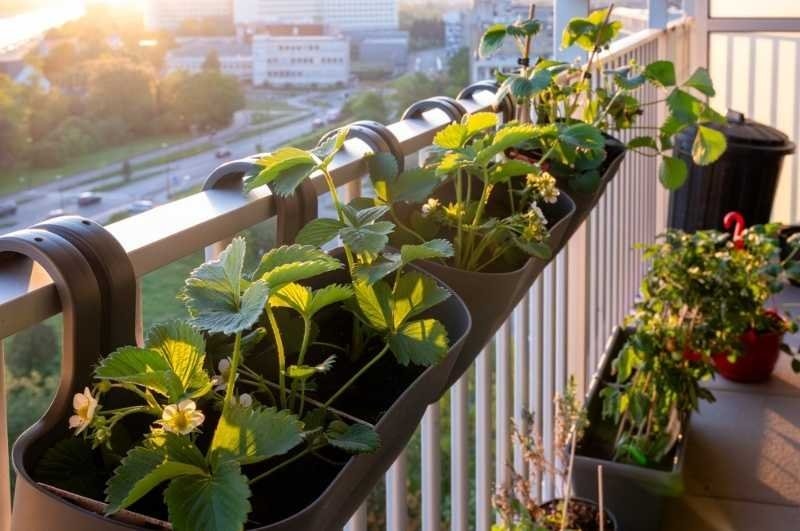
A green balcony doesn't have to take a lot of space. A few simple, flattering edge railers can dress up a blank edge line with flowers or herbs or trailing foliage without occupying the walkway. The key here is to select containers that meet the requirements of the deck, climate, sunlight, and plants you wish to have. Vertical color is more applicable to a narrow balcony than another floor pot.
Similarly, a sunny railing will require a different selection of plants than one in the shade. In this blog, we are going to take a look at practical planters with fittings, planting combinations, options in size, and some simple ideas to help fill up the balcony without crowding.
The best railing planters do more than hold plants. They use an overlooked strip of space and create a visual border around the balcony. That makes them especially useful where floor space is tight.
Balcony planters should be selected according to sunlight first and appearance second. A south-facing balcony may handle sun-loving flowers, while a shaded corner needs foliage that tolerates lower light.
Measure the usable railing length before buying. Two medium balcony planters can sometimes look better than one oversized container that blocks the view.
A railing planter box works well when you want several plants to read as one arrangement. Long rectangular boxes create a continuous green edge, particularly on narrow balconies.
Check for good mounting brackets, drainage holes, and root depth. A decorative railing planter box is useful only when it remains stable after watering.
Color can be introduced at eye level with flower boxes for railings, but weight needs to be taken into consideration. Wet soil is considerably heavier than a dry container, and mature plants add more weight over time.
Before installation, check what the railing and mounting system can safely support. Never assume a decorative railing can carry a large box simply because the brackets fit.
Modern balconies often suit simple rectangular flower boxes for railings in neutral finishes. Traditional spaces can handle more decorative shapes or softer colors.
For a less predictable look, mix upright plants with a few trailing varieties. The flowers then spill over the edge instead of forming one flat row.
| Planter Type | Best For | Main Advantage | Watch Out For |
|---|---|---|---|
| Rail-mounted box | Flowers and herbs | Uses edge space | Weight when wet |
| Hanging rail pot | Small plants | Easy to reposition | Can swing in wind |
| Self-watering box | Busy owners | Holds moisture longer | Higher cost |
| Narrow trough | Repeated planting | Clean visual line | Limited root depth |
The right railing planters depend on how often you water, how exposed the balcony is, and whether you want seasonal flowers or plants that stay for months.
Although deck railing planters are usually associated with outdoor decks, their basic design ideas work well on balconies too. Rail-mounted containers create a green boundary without taking up central floor space.
The useful lesson from deck railing planters is placement. Keep containers evenly spaced, secure them properly, then allow the plants to create variation.
Deck railing planters can combine plants of different heights. Put compact flowers in the main container, then add a trailing plant near the outside edge.
This creates depth instead of a rigid row. On a small balcony, that difference is noticeable.
Choosing plants for balcony spaces should begin with conditions, not trends. Sun exposure, wind, heat from nearby walls, and watering habits all affect what survives.
For balcony gardening, some plants are very easy to care for. For bright spots, succulents are a great option and requirement for managing water levels, while herbs, e.g., thyme and rosemary, can thrive in sunscaped areas.
For more color, consider compact flowering plants suited to your local climate. Avoid filling every container with plants that have identical watering needs unless you want an especially uniform look.
A simple planting formula works well: one upright plant, one fuller middle plant, and one trailing plant. This gives railing planters height, volume, and movement. It also prevents the balcony edge from looking like a row of identical nursery pots.
For example, an upright flowering plant can sit behind compact foliage while a trailing variety falls toward the outside.
A balcony doesn't feel stuffy if it is greened up. Plants can be used on the edges by training them into planters for railing. This frees up valuable floor space for seating, moving around, or a small table. Practical siting and choice of plants for the light and weather are the best combination for producing the best results.
For balcony planting, install planters tightly so they don't slide around; when there is space for continuous planting, consider using flower boxes that attach to the railing; and take inspiration from deck railing planters for flower design ideas, such as spacing and layering. Include appropriate plants that can accommodate a balcony, ensure proper drainage, and allow the plants to grow gradually.
Only use with a mounting system specially built for the balcony structure. When installing on glass or frameless systems, the type of railing available might not provide a safe attachment method, so check it first; standard railing hooks might not work alright.
Rarely, when containers have good drainage and strong supporting/base or attachments. In case of an unusually wet rainy day, however, the rain adds a lot of weight to the soil, so exposed balconies must be checked after heavy rainfall.
Absolutely, flowering containers can be a valuable source of nectar for pollinators. Combining an assortment of blooms that flower at different times can add interest to the balcony for bees and butterflies throughout the growing season.
Use strong brackets, fastenings, and containers outside. There should not be very tall plants or top-heavy containers on exposed railings, as they will move with the wind and put strain on the mounting points.
Yes, there are a few vegetables and herbs that will grow well in a container when positioned in the appropriate sunlight. Leafy greens, herbs, radishes, and some compact varieties of tomatoes do well in a container with adequate depth and drainage.
This content was created by AI