

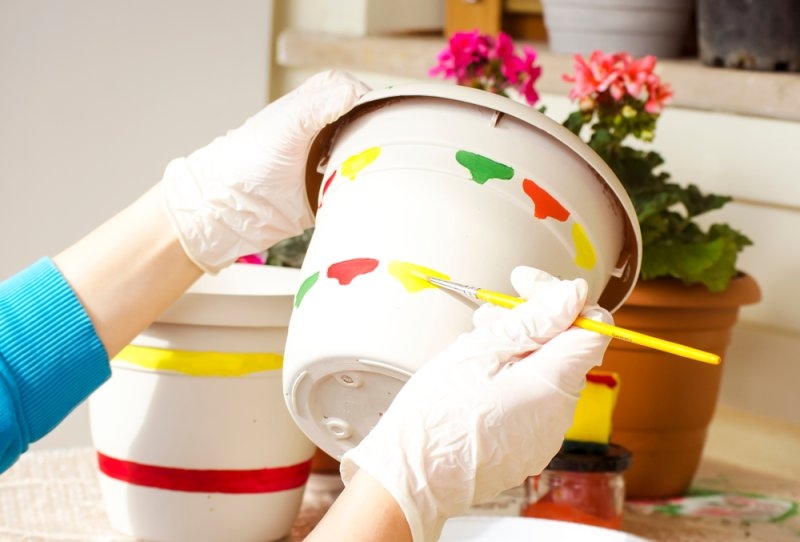
Color, life, and personality can be injected into any garden, balcony, patio, or interior space with the help of painted flower pots. Unfortunately, paint wears away and chips and cracks when it is exposed to moisture, the sun, and varying temperatures. Knowing how to properly seal painted flower pots can save the paint and prolong the life of your pots, and prevent your creations from chipping, fading, and peeling away. When used properly, the right sealer can help you protect your creations.
When gardeners choose to paint terra cotta, clay, ceramic, or concrete planters, they generally need to apply a sealant after their creation is finished. Paint alone offers no protection to the surface. A good sealer will create a layer over the paint and will protect the color and finish.
Painted pots undergo extreme abuse throughout the year. The sun can be hot and wear on paint pigments, while rain will try to seep through pores and will create cracks and chips in the paint surface. Over a short period of time, painted pots that are left outside unprotected can start showing signs of damage after as little as a few months. Small chips then turn into large areas of missing paint as they spread across the container.
Good flower pot protection helps avoid these conditions, creating a seal against the weather to keep moisture from reaching the painted surface. This barrier helps extend the life of your beautifully designed container for many years. Products designed for weather-resistant planters can prevent them from getting damaged. This will mean that you are doing less repainting throughout the year and more enjoying your creations in your garden display.
Not all sealants have the same quality, especially when considering outdoor use and prolonged exposure. Some sealers do not hold up to outside weather like rain, sun, and snow.
Clear acrylic sealers work well on any material and dry quickly while giving great protection to the flower pot painting from moisture and UV radiation. Spray sealers are especially useful on detailed designs and detailed sections of your pot. Polyurethane products can be a more durable product when the pot will stay outside all year long.
Before purchasing an outdoor planter sealant, you need to be sure it is for outdoor use. Some craft sealers can't endure outdoor elements. Look for sealers designed specifically for outdoor crafts or planters. Many garden spray sealers come with added UV protection that can keep paint colors from fading even when they are outside all the time. These will prevent chipping and peeling for the entire year to come.
Clean your pot first to make sure no dirt or dust remains on the surface that will interfere with adhesion. Then, spray each coat of sealant in thin, even applications. Spraying in many layers will produce a much stronger and even coverage. Allow each coat to dry thoroughly before applying another coat of sealant.
This process is critical to avoid problems. Make sure to get any outside surfaces and edges as well if the planter is intended for outdoor use. Sealing the top edge of your pot will help keep moisture out from under the paint when you water.
Waterproofing your painted pots will give them the best protection from moisture, which is one of the most detrimental conditions to painted outdoor planters. Many types of sealers, when applied properly, will create waterproof painted pots.
A quality sealer with at least two or three coats applied thinly and evenly will prevent water from penetrating the painted surface. Apply the sealer over the outside surface and any edges you are interested in sealing for your flower pots. Sealing only the inside rim of a planter will keep moisture out from between the paint and the container, while not allowing excess water to pool inside your pot where it is not needed.
It's a great idea to have waterproof painted pots so that they will last for a very long time without looking like the paint has worn and chipped away from the rest of the container.
Here are some easy painted pot maintenance tips to consider:
Some gardeners try to save time and apply the sealant over the wet paint. If the paint is not dry before you put on the sealer, you could trap moisture within the container and make your paint bubble, peel, or become splotchy.
Others apply too many layers at once. A better finish is usually created with thinner applications applied one after another over time, rather than one extremely thick coat. Sometimes, painted pots are not properly cared for after they are painted and are left outside to get damaged by the elements when a better job could have been done.
Read Next: Chalk Paint Flower Pots: Matte Style For Modern Gardens
Understanding the sealing of painted pots will increase the life and beauty of your projects. A good quality outdoor planter sealant, such as acrylics, will protect your paint from the effects of UV light, the sun, and the weather in general for many years to come, and your colors will still look bright for years.
Along with Painted Pot Maintenance, a well-sealed painted pot will give you waterproof painted pots to add beauty and color to your garden for years to come.
Many craft sealers are designed for indoor craft applications and do not have durability in outdoor weather conditions. Using a craft sealer labeled specifically for exterior projects would be a better option to protect a flower pot. These products will be formulated to withstand UV exposure, moisture, and temperature fluctuations better.
Typically, allow a painted pot to dry for at least 24 hours before applying a sealer. There are specialty paints that have a longer curing time, so it is always best to consult with the paint manufacturer's directions. Applying a sealer too soon can compromise the bond with the paint, the longevity of the coating, and it could potentially chip or bubble over time.
Some sealers give a shiny/glossy finish, others provide a matte finish, and others still have a satiny appearance. It varies by product. A test on a small section of the pot will let you know if you like the finish before sealing the entire project.
Resealing needs will depend on how harsh the weather is at your location and the quality of the paint and sealer that you used in the first application. Most gardeners reapply a sealant every two to three years. Inspect the painted and sealed pot to see if any touch-up will be needed. When the colors look dull or water no longer beads off the pot, then it will be time to apply another sealant layer.
This content was created by AI